We are the Genetic Education Academy, one of the leading Indian genetic education platforms. We are serving knowledge in the field of genetics.
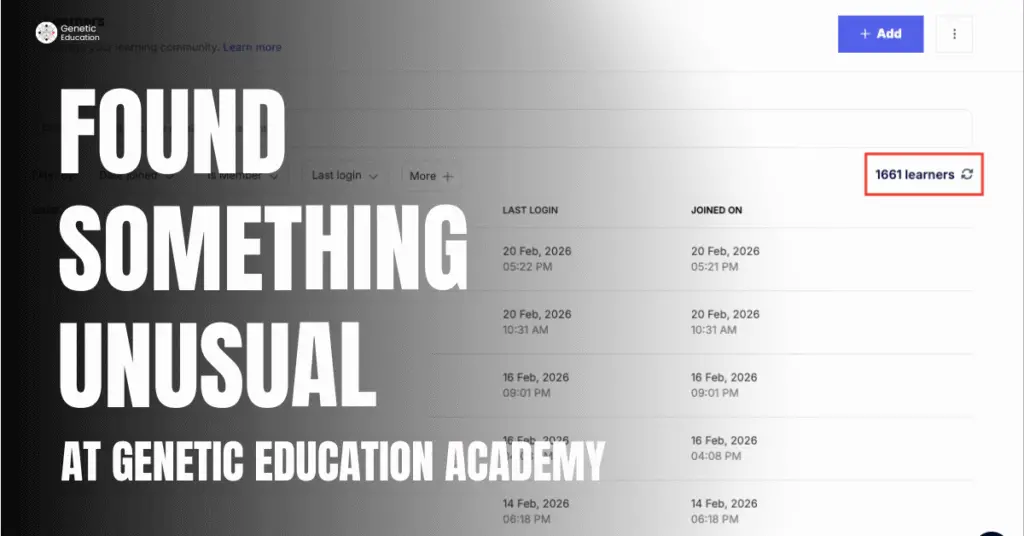
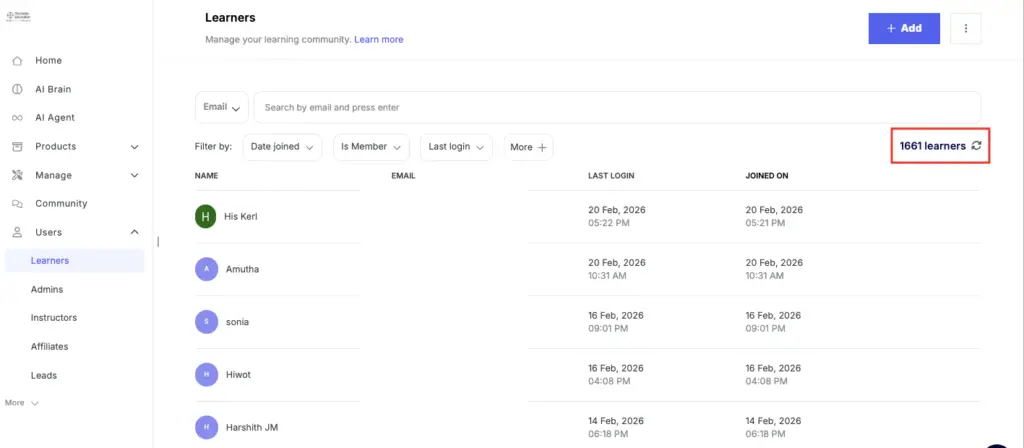
When I say knowledge, I mean deep and expert-level information and optimizations. In the last couple of years, we have had more than 1600 active learners at our academy.
We run various short and long courses at the academy, but our most popular course, the 21-Day Genetic Techniques cohort, is the game- changer for students.
While doing the statistical analysis, we noticed something unusual. And that’s something serious that we didn’t expect.
Let me share it.
Key Topics:
Doctors are leading:
We designed the course for bachelor’s and master’s students.
What do you think?
Who enrolled the most?
In most of the paid courses, the learners are doctors and/or professionals, real doctors who are doing clinical stuff.
For instance, our FISH (Fluorescence In Situ Hybridization), the most popular individual course, has almost all learners who are either doctors or professionals who want to upgrade their skills.
In our 21-Day Genetic Techniques cohorts, doctors are the main learners and not students.
This small observation was shocking.
Further analysis showed that students are mostly using free stuff or entry-level courses. That’s totally fine, our content is powerful either at a free or paid level. But this shows something that we never expected!
Why not students:
We notice that early-career professionals are more serious about their careers and skills upgrading.
They particularly learn skills that help them in their career or in professional development.
Students usually focus on educational fulfillment. They are usually looking to fill their educational gap. Because a topic is in their curriculum, they enrolled.
The good thing is, early professionals are serious about their careers, but the bad thing is, students aren’t.
We are actively engaging with our learners and we also observed that cost isn’t a major factor for them. Students will enroll in a course if it will benefit them. But they don’t know what the “benefit” means to them.
The major gap in skills building:
This small but deep observation helped us understand something that has been a major gap in education for a long time- skills building.
Graduates are unaware of what they can do in their lives; they are even unaware of their potential career options and thus, they aren’t focusing on skill building.
Imagine! What if a student focuses on understanding the NGS pipeline, sequencing and related skills for 5 to 7 years (including Bsc, MSc and training), a couple of years of experience and his or her career will skyrocket.
But they need to have that clarity from the very beginning. They have to choose the course and additional learning modules accordingly throughout their educational tenure.
Then?
The sky is the limit.
Endless opportunities in research, education and industries are waiting. But that can only happen if they focus on building one skill and learn it properly.
Life science is a vast field, I know, not everyone is interested in doing PCR, real-time amplification or sequencing.
But that’s not needed, you no need to focus on so many things,
You don’t need to focus only on the wet lab experience.
You need to focus on that one thing you like the most, you are interested in doing and will give you amazing returns on investment.
Do a simple exercise, go to ChatGPT, enter your field and ask to give you the set of skills in your field.
Now make a list, write down those one or a few skills that you are interested in doing.
Again, go to ChatGPT and ask about career opportunities and expected salary around those skills.
You will be amazed by the results. Trust me.
That’s how… using a focused approach, you can shine in life sciences. I always say one thing in my guest lectures,
“Learn now! Otherwise, someone else will make you learn the same thing more harshly.”
Think about it.